
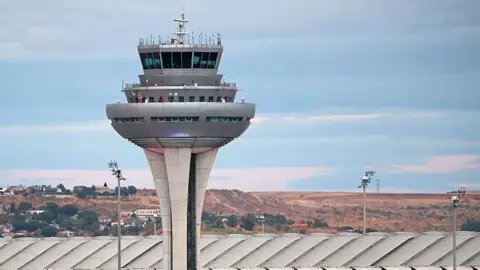
Spain has closed its airspace to American warplanes engaged in attacks on Iran, as stated by Madrid's defense minister Margarita Robles.
Clear Message
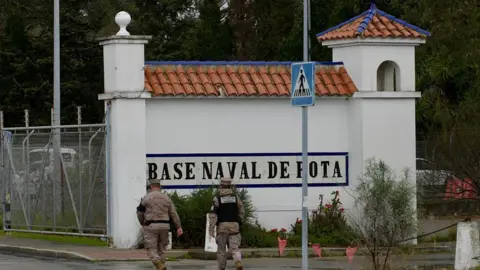
"We are denying the use of the Rota and Morón for any activities related to the conflict with Iran," Minister Robles stated, adding that Spain had "expressed this stance to the American government from the outset."
The top diplomat José Manuel Albares said the purpose of the move was to "refrain from measures that could prompt an expansion in this conflict."
American Reaction
The American administration has so far been silent, but US President Trump has previously threatened to institute a full trade embargo on Spain over its objection to the conflict.
Firm Position
From the beginning of the war in late February, the Prime Minister Pedro Sánchez has been a leading critic of the American and Israeli strikes, labeling them "irresponsible" and "unlawful."
Last month, Sánchez said Spain had denied the US use of the two jointly run military bases at Morón and Rota, both in Andalusia.
"Ours is an independent state that does not wish to participate in illegal wars," he said.
He also announced that "every request that entailed missions related to the operation in Iran were turned down - every single one of them, including those of support planes."
Logistical Consequences
Some US bombers participating in operations in Iran are based at the RAF Fairford base in the UK, subsequent to London's approval to a request from the US.
Aircraft taking off from there will be forced to bypass much of the Spanish airspace - either by flying over the eastern Atlantic or over France.
Reports indicate that planes would only be able to transit through Spain's skies or touch down at the bases in case of an urgent situation.
Historical Stance
In a speech, the PM Sánchez spoke about global hostilities and said the Spanish government's position could be described as "against war."
Subsequently, the Iranian embassy in Spain indicated Tehran would be open to appeals from Madrid concerning shipping through the Strait of Hormuz because Spain was "adherent to international law."
Global Oil Impact
Nearly a significant portion of the international petroleum normally passes through the strategic strait between Iran and the tip of the Arabian peninsula.
In recent times, the danger of strikes by Tehran's military assets has halted traffic, triggering a spike in oil prices.


